ADAS + AVM
Calibration System for Advanced Driver Assistance Systems (ADAS) and 360° Surround View System (AVM)ADAS and AVM calibration and adjustment equipment is used to precisely set the cameras, radars and sensors of a vehicle after production, repair or part replacement.
By ensuring the correct and accurate operation of advanced driver assistance systems such as Autonomous Emergency Braking (AEB), Lane Departure Warning (LDW), Adaptive Cruise Control (ACC), traffic sign recognition and the 360° Surround View system (AVM), this system plays an important role in increasing driver safety.
Features
- Precise calibration of vehicle cameras, radars and sensors
- Support for the 360° Surround View system (AVM)
- Support for Autonomous Emergency Braking (AEB)
- Support for Lane Departure Warning (LDW)
- Support for Adaptive Cruise Control (ACC)
- Support for traffic sign recognition
- Increased safety for drivers, passengers and other road users


Roller and Brake Tester
Roller Brake Testing MachineThe Roller and Brake Tester is an important piece of equipment in end-of-line vehicle test lines. By simulating real vehicle motion on rollers, it evaluates the performance of the braking system. By precisely measuring the braking force of each wheel and checking the braking balance between the wheels of an axle, it makes it possible to detect performance differences and potential brake system faults, and helps ensure that brake performance meets safety and quality requirements before the vehicle is delivered.
Features
- Handbrake test
- Cruise control test
- Speed test
- ABS brake test
- Precise measurement of the braking force of each wheel
- Checking and controlling brake balance between the wheels of each axle
- Detecting performance differences and potential faults in the brake system
- Simulating real driving conditions without moving the vehicle
- Suitable for end-of-line (EOL) test lines
- Can be used in quality control and technical inspection centers
- Helps verify vehicle compliance with safety standards and quality requirements


Wheel Alignment
Wheel Angle Alignment MachineThe Wheel Alignment machine is specialized equipment for precisely measuring and adjusting vehicle wheel angles, including camber, caster and toe. Using sensors and advanced measuring equipment, it identifies angle deviations and adjusts them to the manufacturer's standards. Using this machine improves vehicle stability, steering response and safety, and prevents uneven tire wear, increased fuel consumption and premature wear of suspension and steering components.
Features
- Precise measurement of Camber, Caster and Toe angles
- Quick identification of wheel angle deviations
- Adjusting wheel angles to the vehicle manufacturer's standards
- Use of sensors and advanced measuring equipment
- Improved vehicle stability and steering response
- Increased driving safety and comfort
- Prevention of uneven tire wear
- Helps reduce fuel consumption
- Reduces premature wear of suspension and steering components

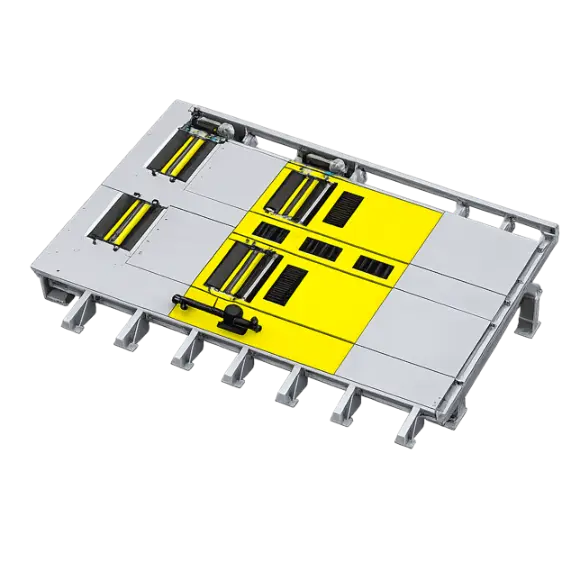
Headlight Tester
Vehicle Headlight Testing and Adjustment MachineThe Headlight Tester is specialized equipment for precisely measuring, evaluating and adjusting the beam angle, light intensity, height, focus and alignment of headlight beams, used in vehicle inspection lines, technical inspection centers and workshops. Using precise measurement systems, it checks and adjusts headlight performance to technical standards, and by improving the driver's field of view, preventing glare for oncoming drivers and increasing safety, it ensures that headlights meet standard requirements.
Features
- Precise measurement of headlight intensity
- Precise checking and adjustment of beam angle
- Controlling the height, focus and alignment of the light beam
- Available in gantry, rail and other models
- Suitable for vehicle inspection lines
- Can be used in technical inspection centers and workshops
- Improved driver visibility when driving at night
- Reducing and preventing glare for oncoming drivers
- Increased traffic safety
- Ensuring headlight performance meets technical standards


Side Slip Tester
Wheel Side Slip Testing MachineThe Side Slip Tester is specialized equipment for measuring the amount of sideways deviation and slip of a vehicle's wheels as it passes over. By evaluating steering alignment and wheel alignment, it identifies problems such as misadjusted wheel angles and worn or damaged suspension and steering components. Using this machine improves stability and steering response, reduces uneven tire wear, increases safety and prevents premature wear of parts.
Features
- Precise measurement of wheel side slip and sideways deviation
- Evaluating steering alignment and wheel alignment
- Detecting misadjusted wheel angles
- Identifying potential problems and damage in the suspension and steering
- Helps improve vehicle stability and steering response
- Reduced uneven tire wear
- Increased driving safety
- Preventing premature wear of steering and suspension components

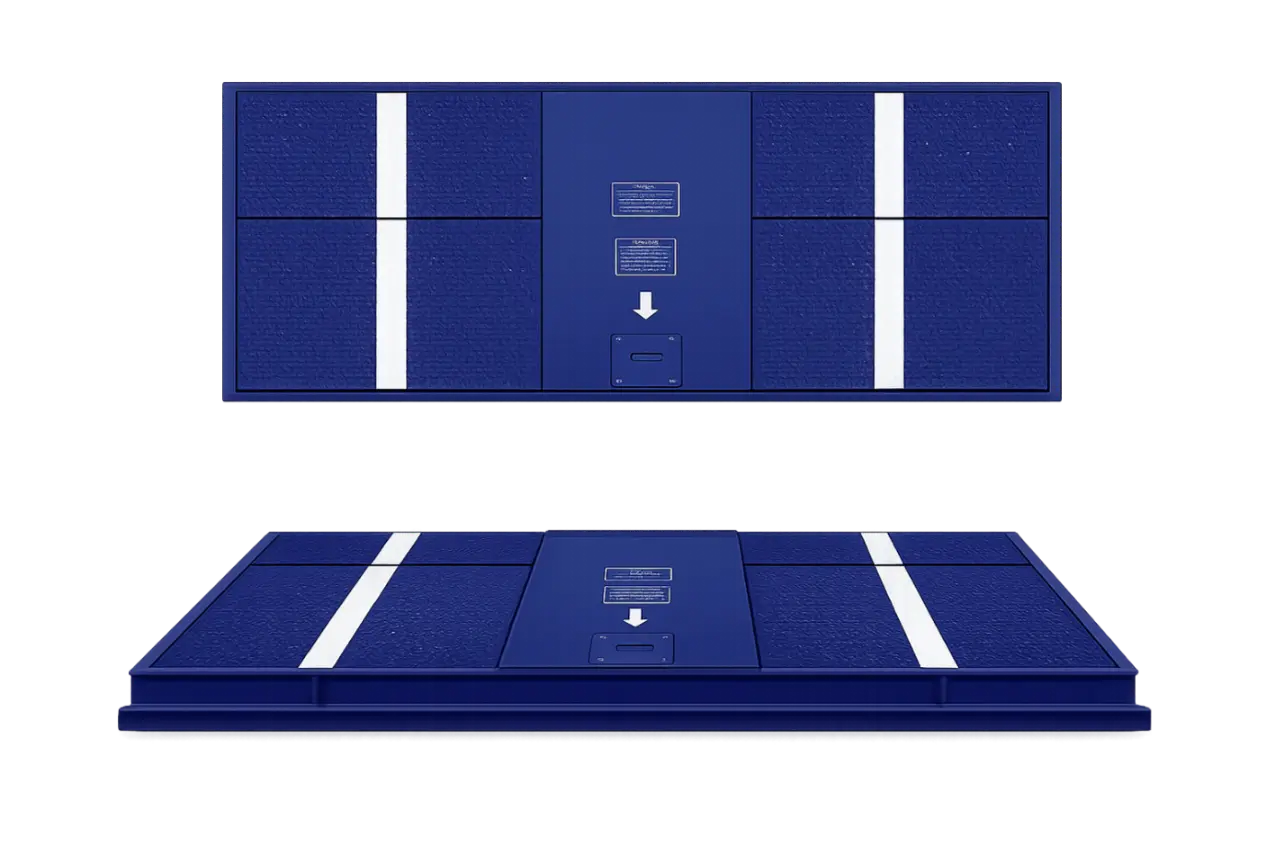
Bumpy Road
Rough Road SimulatorThe Bumpy Road simulator is specialized equipment that simulates a vehicle passing over rough roads, bumps and uneven surfaces. By applying controlled vibrations and movements to the wheels, it makes it possible to check the performance of the suspension, steering, front end and other mechanical components of the vehicle. By helping to identify abnormal noises, loose parts and potential faults, it improves diagnostic accuracy and gives confidence in correct vehicle operation, safety and driving quality.
Features
- Simulating real rough road and speed bump conditions
- Applying controlled vibrations and movements to the wheels
- Checking the performance of the suspension, steering and front end
- Ability to check other mechanical components of the vehicle
- Identifying abnormal noises and loose parts
- Detecting potential faults and defects in the suspension
- Increased accuracy in vehicle diagnostics
- Helps ensure correct vehicle operation
- Increased driving safety and quality


Soundproof Room
Acoustic (Soundproof) RoomThe Soundproof Room is an isolated, controlled environment in end-of-line vehicle test lines, used for the precise evaluation of vehicle noise and vibration (NVH). By eliminating ambient noise, it allows the sounds of the engine, drivetrain, exhaust, brakes and other vehicle components to be measured and analyzed with high accuracy, and helps identify acoustic anomalies, improve assembly quality and confirm that the product meets quality standards.
Features
- Fully isolated environment that eliminates ambient noise
- Suitable for NVH (noise and vibration) tests
- Precise measurement of engine, exhaust, brake and accessory sounds
- Highly sensitive detection of acoustic and vibration anomalies
- Improved quality control accuracy and fewer diagnostic errors
- Recording, storing and analyzing test results
- Compliance with international vehicle acoustic test standards
- Better final product quality and improved customer comfort and satisfaction


Rain Detection System
Rain Sensor and Automatic Wiper Test SystemThe Rain Detection System is end-of-line (EOL) test equipment used to evaluate the performance of a vehicle's rain sensor and automatic wiper system. By simulating rainfall through water droplets, it checks the sensor's operation and the vehicle control unit's response, and verifies correct rain detection, automatic wiper activation, wiper speed adjustment in proportion to rainfall intensity, and the integrity of communication between the sensor, ECU and wiper assembly.
Features
- Suitable for end-of-line (EOL) testing
- Simulating rainfall without the need for real rain
- Precise Rain Sensor performance testing
- Checking correct detection of rain
- Controlling automatic wiper activation
- Checking wiper speed changes in proportion to rainfall intensity
- Verifying signal integrity and communication between the sensor, ECU and wipers
- Rain simulation with water droplets or an optical method
- Controlled and repeatable evaluation of system performance


Sound Level Meter
Sound Level Measuring InstrumentThe Sound Level Meter is a precise, portable instrument for measuring sound intensity and sound pressure level (SPL) in decibels (dB). Using a sensitive microphone and signal processing, it measures the noise of environments, equipment and machinery.
With features such as A and C frequency weighting filters, min/max value recording and real-time sound level display, it is used across industries, especially in the automotive industry, to measure engine, exhaust, horn and cabin noise and to check compliance with national and international standards.
Features
- Precise measurement of sound intensity and sound pressure level (SPL)
- Sound level display in decibels (dB)
- Sensitive microphone and precise signal processing
- A and C frequency weighting filters
- Recording of maximum and minimum sound levels
- Real-time sound level display
- Portable design and easy to use
- Suitable for controlling environmental, equipment and machinery noise
- Widely used in the automotive industry and technical inspection centers
- Can measure vehicle engine, exhaust, horn and cabin noise
- Helps assess compliance with national and international standards
- Suitable for monitoring and assessing noise pollution


Multi Fluid Filling Equipment
Multi-Purpose Filling SystemThe Multi Tracking System is a multi-fluid filling system (Multi Fluid Filling Equipment) designed for high-capacity production lines.
In this system, a single filling machine simultaneously charges several fluids (such as A/C refrigerant, brake fluid, antifreeze, power steering fluid and more) into the vehicle at one station. As a result, production capacity increases dramatically compared to conventional machines.
Features
- High production capacity
- Suitable for mass production lines
- Ultra-compact design
- Ability to combine several filling processes on one line
- Reduced cycle time
- Advanced user interface
- Simple troubleshooting
- Improved hydraulic system
- Can be connected to factory control systems
Benefits
- Increased production capacity
- Reduced floor space
- Reduced filling time
- Increased line productivity
- Customizable
- Use of standard industrial components

Stand Alone and Economy Filling Machines
Stand-Alone and Economy Fluid Filling MachinesThe Stand Alone machine is installed alongside the production line. With this type of equipment, only one fluid is filled at the work station. It is suitable for factories with medium or low production capacity, or those that fill vehicle fluids independently of one another.
Features
- Leak testing of the vehicle fluid circuit using compressed air or nitrogen gas
- Leak testing by applying pressure as well as vacuum
- Vehicle filling by volume or pressure
- Activating the ABS unit while injecting brake fluid to fully bleed air from the circuit
- Option to inject PAG oil before injecting refrigerant
- Advanced controller and display
- Option to record injection results in a printout or an Excel file
- Use of very precise sensors and measuring devices
Advantages
- Low initial investment
- Simple design
- High accuracy
- Easy installation
- High quality
- Traceability
- Use of standard industrial components
- Low maintenance cost
- Customizable


Glue Sealing Machine
Glass Adhesive Injection and Sealing MachineThe glass adhesive injection and sealing machine is industrial equipment for bonding, joint sealing and sealing of parts, applying adhesive or sealant to the target location in a defined pattern. Using an automatic or robotic motion system, it can follow a set path at uniform speed and thickness and create a continuous, controlled layer of adhesive or sealant. The machine is designed to carry out the part-sealing process in production lines with minimal operator involvement and good repeatability.
Features
- Automatic bonding and sealing process
- Creating adhesive and sealant lines in a defined pattern
- Uniform adhesive application along the sealing path
- Controlling the speed of the nozzle or applicator
- Adjustable amount and thickness of applied adhesive
- Straight and curved paths and complex patterns
- Programmable for different work paths
- Reduced human involvement in the process
- Fewer errors and less variation in sealing operations
- Suitable for sealing joints, connections and contact surfaces
- Can be used for various vehicle parts and assemblies
- Suitable for series and mass production
- Integrates with production lines and automation equipment
- Can be used in the automotive and parts manufacturing industries
- Can be used in home appliances, lighting and industrial equipment

Robot Calibration Equipment
Vehicle-to-Robot Position Calibration SystemThe vehicle-to-robot position calibration system (Robot Calibration Equipment) is precise equipment for determining and correcting the position and orientation of a vehicle relative to the robot coordinate system on automotive production lines. By measuring the actual position of the vehicle and sending correction data to the robot controller, it compensates for errors caused by fixture tolerances and body movement, improving the accuracy and quality of robotic operations such as gluing, sealing, welding, assembly and inspection.
Features
- Precise measurement of vehicle position and orientation
- Aligning the vehicle and robot coordinate systems
- Accurate body positioning before robotic operations
- Sending correction data to the robot controller
- Compensating for errors caused by fixture tolerances and vehicle movement
- Improved accuracy of gluing, sealing, welding and assembly operations
- Improved accuracy of robotic inspection processes
- Fewer errors caused by changes in body position
- Increased production quality and stability on automated lines
- Suitable for precise robotic processes on automotive production lines

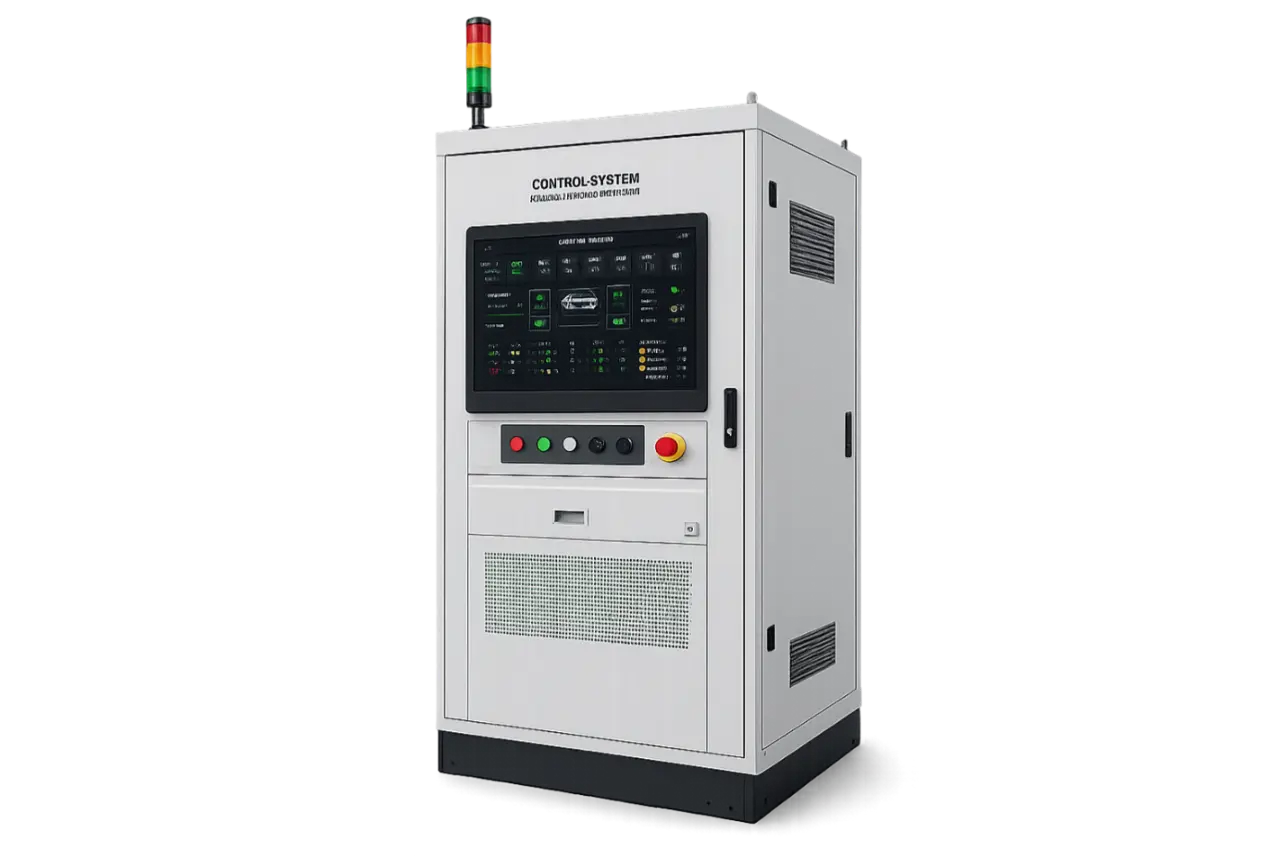
Control System
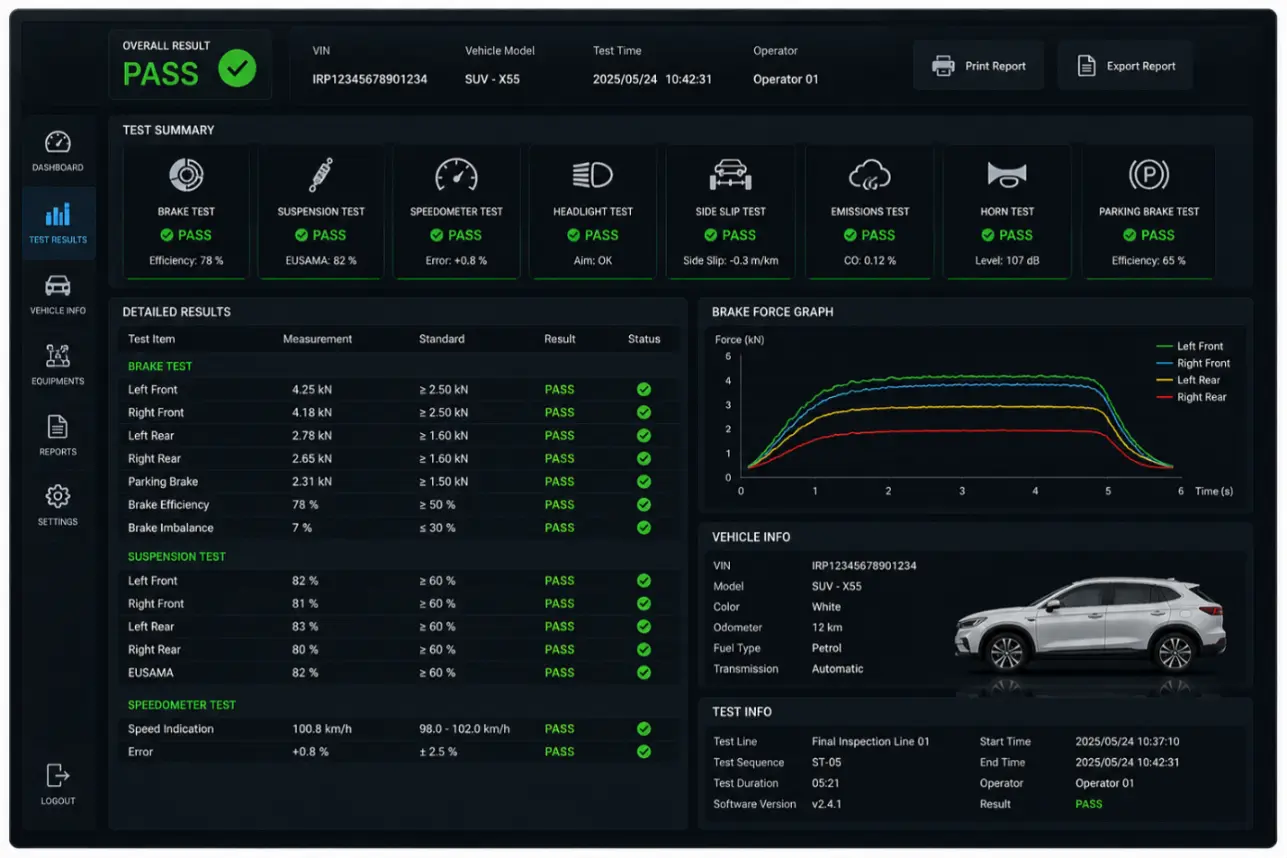
Central Control and Management SystemThe central control and management system of the end-of-line (EOL) test line acts as the intelligent core of the line, responsible for controlling, coordinating and supervising all test equipment. By integrating equipment, running tests automatically, collecting and analyzing data and presenting results in real time, it increases the accuracy, speed and reliability of quality control. It also automatically stores and archives data and tracks each vehicle completely by VIN, enabling connection to MES, ERP and factory databases, analytical reporting, equipment monitoring and intelligent alerts, and helps reduce human error, increase productivity and guarantee final product quality.
Features
- Centralized control and management of all EOL test line equipment
- Integration of different test equipment and stations
- Automatic data collection, processing and analysis
- Real-time display of test results
- Automatic storage and archiving of test data
- Complete vehicle traceability by VIN
- Seamless integration with MES and ERP systems
- Connection to factory databases
- Equipment status monitoring and intelligent alerts
- Reduced human error
- Faster, more productive quality control
- Improved accuracy and reliability of tests
- Helps with fast decisions and production process optimization
- Guaranteed final product quality
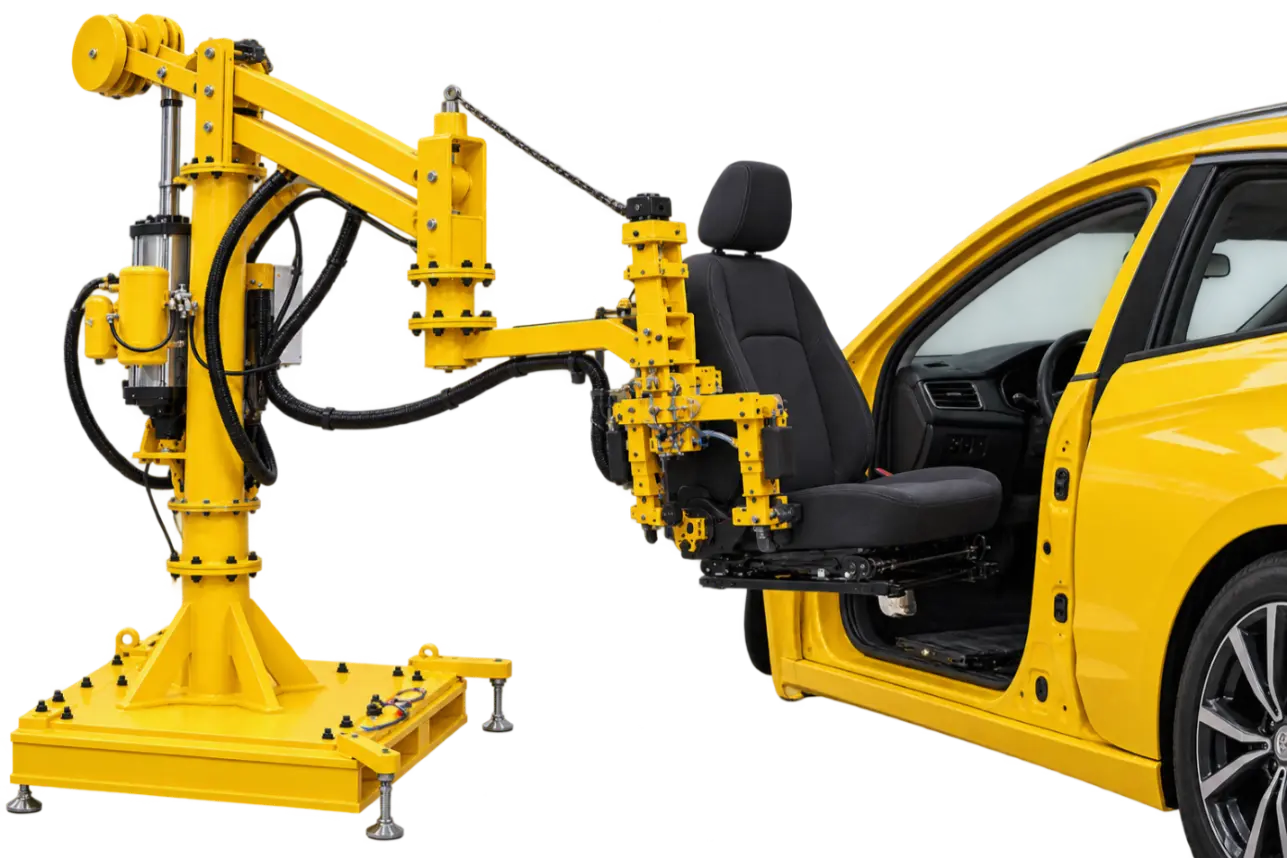
Manipulator Equipment
Handling ManipulatorsA manipulator is semi-automatic or automatic mechanical equipment used to grip, lift, move, rotate and precisely position parts and assemblies (such as glass, dashboards, seats, batteries, tires, fuel tanks and more) at the desired location. This equipment is usually fitted with mechanical arms, a motion system and a gripper, and allows parts to be moved and positioned along one or more axes and at different angles. Manipulators are used on production lines to reduce the physical effort required from operators, make it easier to handle heavy or bulky parts, improve positioning accuracy and make the process safer. Unlike industrial robots, which are programmed for processes such as welding, painting or assembly, they are mainly responsible for carrying, holding, rotating and positioning parts.
Features
- Precise handling and positioning of parts
- Lifting heavy and bulky parts
- Rotating and changing the angle of parts
- Movement along one or more axes
- Fitted with various grippers suited to the part
- Reduced physical effort for operators
- Increased safety when handling parts
- Less damage and fewer errors when transferring parts
- Can be used manually, semi-automatically or automatically